



Knit Happens: Where Yarn Nerds Unwind
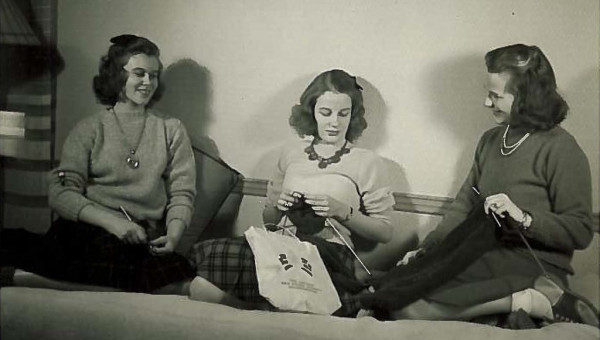
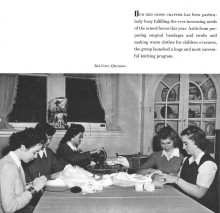
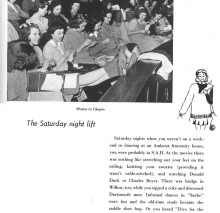
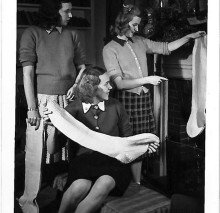
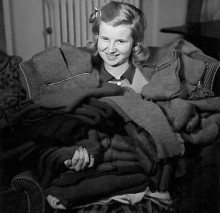
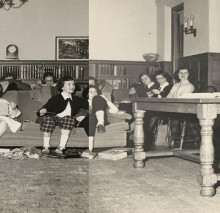
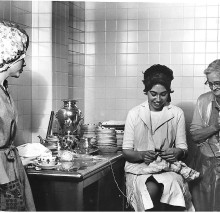
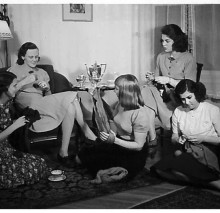
Photo Gallery of Knitting through the years at MHC
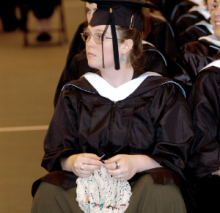
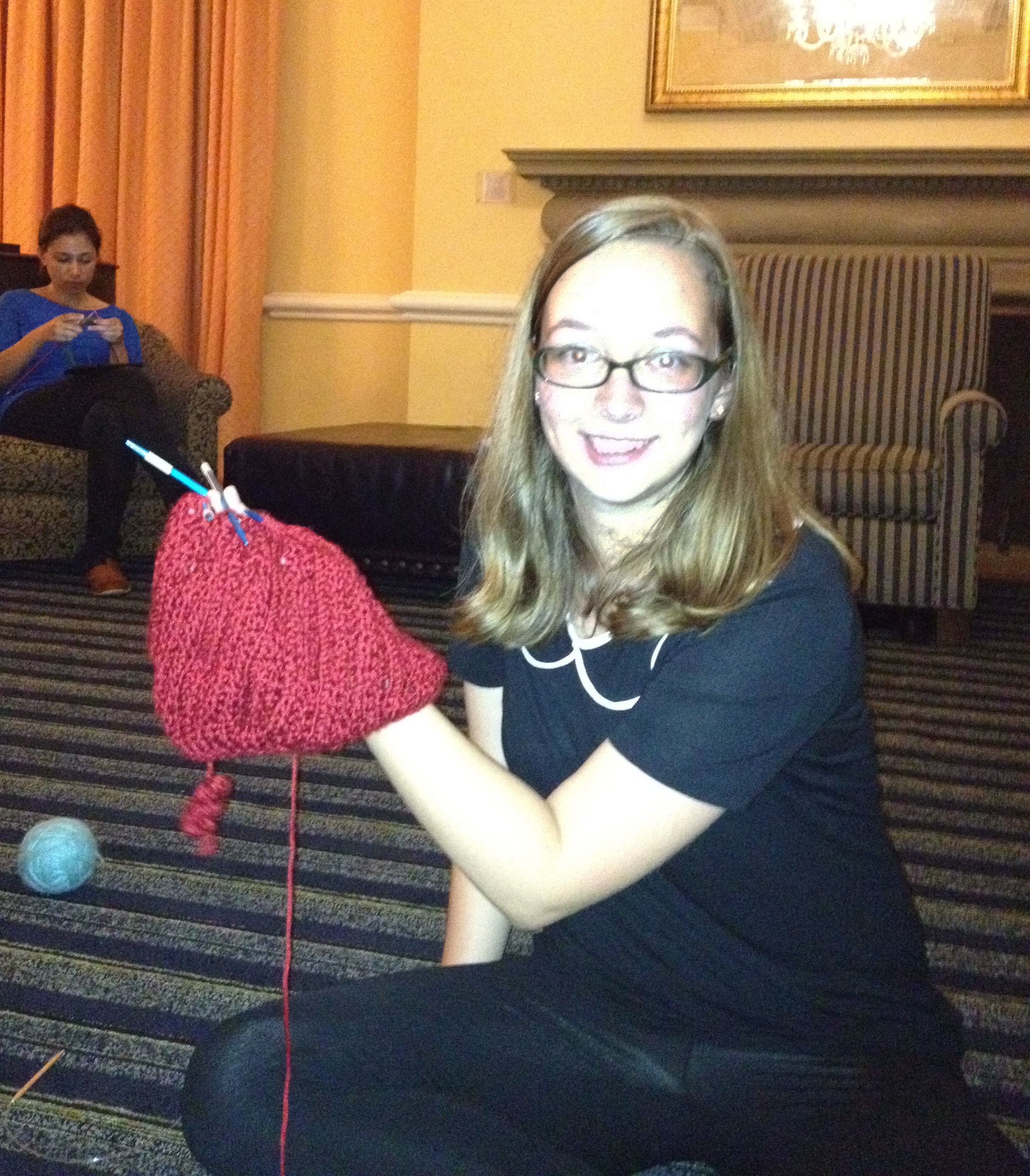
Larkin Turman ’15, president of
Knit Happens
Photo by Olivia Lammel ’14
The North Rockies common room is the coziest place on campus every Tuesday night. Warm lamps glow yellow. Knitting needles clink softly and are just audible over the hum of chatter and laughter. Pockets of women are curled up in upholstered chairs and sprawled out on the floor. They’ve come to knit.
Mount Holyoke’s knitting club Knit Happens is flourishing. The group formed last year after current-president Larkin Turman ’15 and her floor mates discovered their shared passion for yarn arts. They thought, “why not have a club, instead of just sitting in our rooms knitting by ourselves,” she explains. Initially, it was just the original group of roommates hanging out, knitting, and watching TV in the common room, but slowly more students were roped in by their desire to learn the craft. “We wanted to have a place to support new knitters,” Turman says.
This fall, the group has more than tripled. Their original mailing list was just twenty names and now their weekly email reaches over seventy students.
This burgeoning bunch has no plans to put down the needles any time soon. “This year we want to start doing charity knitting,” says Amanda Lueke ’15, vice president of Knit Happens. Together, president and vice president start rambling off a list of charities they’d like to contribute to. Homeless shelters, animal shelters, and children’s hospitals are among the organizations looking for comfy donations. “Knitting is very therapeutic for us,” Turman explains, “but you also have this product at the end.”
On one recent Tuesday most knitters are stitching practical projects: socks, scarves, and hats to fend off the approaching New England winter. Sometimes, though, when the group is feeling more creative, they will knit wackier fare. At past gatherings, people have made coasters, doilies, laptop cases, and crocheted flowers. To raise funds this year, the group plans to make and sell amigurumi, a Japanese word for small, knit stuffed animals.
Knit Happens meets on campus every Tuesday night in the North Rockefeller Hall common room 7-8:30 p.m.
More on Joelle Hoverson ’89
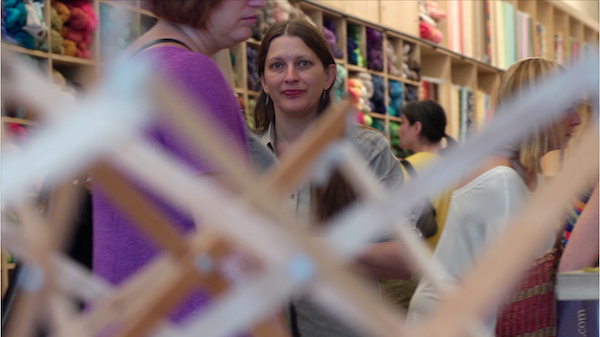
Joelle Hoverson with customers in Purl Soho
Photo courtesy of Integrated Open Road Media Inc.
Purl Soho online store sells materials for knitting, crochet, sewing, patchwork, needlepoint, embroidery, etc. The brick and mortar store is in NYC’s trendy Soho neighborhood at 459 Broome St. The Purl Bee is a craft blog created by Purl Soho that publishes ideas for people to knit, crochet, sew, stitch, etc.
What About that “Turtle Sweater”?

In the article, the author mentions knitting a sweater with a turtle design for her then-boyfriend (now husband), nicknamed “Turtle.” He still has the sweater…here it is.

The antique gold afghan Lynne made for her mother while at MHC.

Close-up of the gold afghan.
—By Olivia S. Lammel ’14
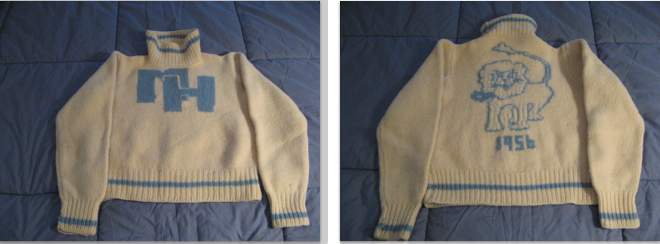
Comment: Apropos “Strands of Time” in the fall Quarterly, here’s what I learned to do in college. Actually, I really believe that occupying my hands and the other scattered parts of my brain helped me to concentrate in class.
—Ellie Rogowski Landowne ’56

Alumnae Advice for Women in Tech
- Jerri Barrett ’83: “Get out of your cubicle and build your network right from the beginning. Make deep connections.” Technical women, Barrett observes, “have a habit of keeping their heads down and getting their work done,” which prevents them from meeting the kinds of people that can advance their careers. Three types are important: collaborators, mentors, and sponsors–higher-ups tho can speak up on your behalf.” She also credits her MHC network for “significant support” throughout her career. “To this day, my first step after any move is to connect with the local club.”
- Leslie Barbour ’86: A veteran in the tech sector, her advice applies to any field: “Don’t be afraid to speak up–about anything. Ask for what you want–a raise, a new position, help. Don’t be mean to anyone. And double-check your work!” Barbour also notes that a woman who can think critically and write well has a leg up on other candidates. “Last year, I received a resume from MHC grad [Cecily Herzig ’96] who had been home with her son. “I knew that her technical stills were likely to be rusty, but I also knew that as an alum, she’d have the other pieces.”
- Alyssa Bennett ’07: “Don’t be scared off by stereotypes of the industry that say women aren’t welcome. My current team has two other female testers who spend their days coding and developing just like the men. I have never seen any of us treated differently or told we don’t belong. Several of my male coworkers have encouraged me to request more technical work than my rank requires, because they believe I’m capable.”
- Beth Dunn ’93: Because Dunn wanted to “earn a solid private sector salary” and “to be taken seriously” when she decided to leave the world of nonprofit ventures (in her case, a regional theater), she went to Simmons for an MBA (“the only women’s college that offers an MBA”). Was the advanced degree necessary to make the switch? “If you ask someone at my company where the average age is 25, they’d say absolutely not! But that’s what I needed to get to the table. When the end user is business, you need that business background.” Whether or not you have an advanced degree, Dunn says, you also have to “create content. I always tell people to start a blog. You then own that piece of the Internet. Also, this is something that you learn best by doing.”
- Jennifer Tetenbaum Miller ’93: An intellectual property lawyer in the tech sector, is currently in house at Cisco Systems and also on the board of Leading Women in Technology. “One of the things we talk about in LWIT seminars is that some of us hold back, trying to think of the perfect thing to say. We sit there, frozen. Studies have shown that people pay attention to your appearance and tone of voice and only a small percentage to what you say. If you’re in the room, you must talk. Don’t be a wall flower or you will be treated as such forever. I force myself to speak. I practice projecting and sounding confident.”
- Dawn-Marie Nelson ’85: Cofounder of Orion Systems, which provides software to the hospitality industry, stresses the importance of social skills, flexibility, and the ability to act as a liaison between coders and customers. “I recently hired a woman who is not all that technical but she’s had a varied career in public speaking and has worked for an airline. Her skill set was intriguing. We’re an engineer-heavy company. They’re great, and incredibly intelligent, but I wouldn’t put them near customers.”
- Hilde Weisert ’66: When the first personal computers–Apple–began showing up in the early eighties, Weisert says, “I remember thinking, I’ve got to learn to do this. So I piled up issues of computer magazines, and I avoided looking at them. It made me mad. But I finally jumped in, kicking and screaming.” She learn word processing, database management, and spreadsheets and then began training others. Today, she is project manager at Cisco Systems. “In this field, the word ‘silo’ comes up often–one group often doesn’t know what the other one is doing.” Weisert attributes her success to good relationships and her ability to “connect the dots”—look at the entire system.
—By Melinda Blau
Off the Shelf: Fall 2012
Nonfiction
University of Texas Press
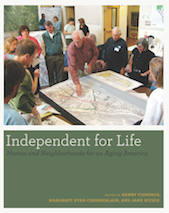
Independent for Life: Homes and Neighborhoods for an Aging America
Edited by Henry Cisneros, Margaret Dyer-Chamberlain, and Jane Hickie
Former Housing and Urban Development Secretary Cisneros, Smith College alumna Dyer-Chamberlain, Hickie, and other experts on aging, architecture, construction, health, finance, and politics offer what’s being billed as the first comprehensive overview of the possibilities and challenges in helping seniors live independently to a very old age.
V. Jane Hickie ’70 is senior research scholar and director of the Politics, Scholars, and the Public Program at the Stanford Center on Longevity.
Bramble Books
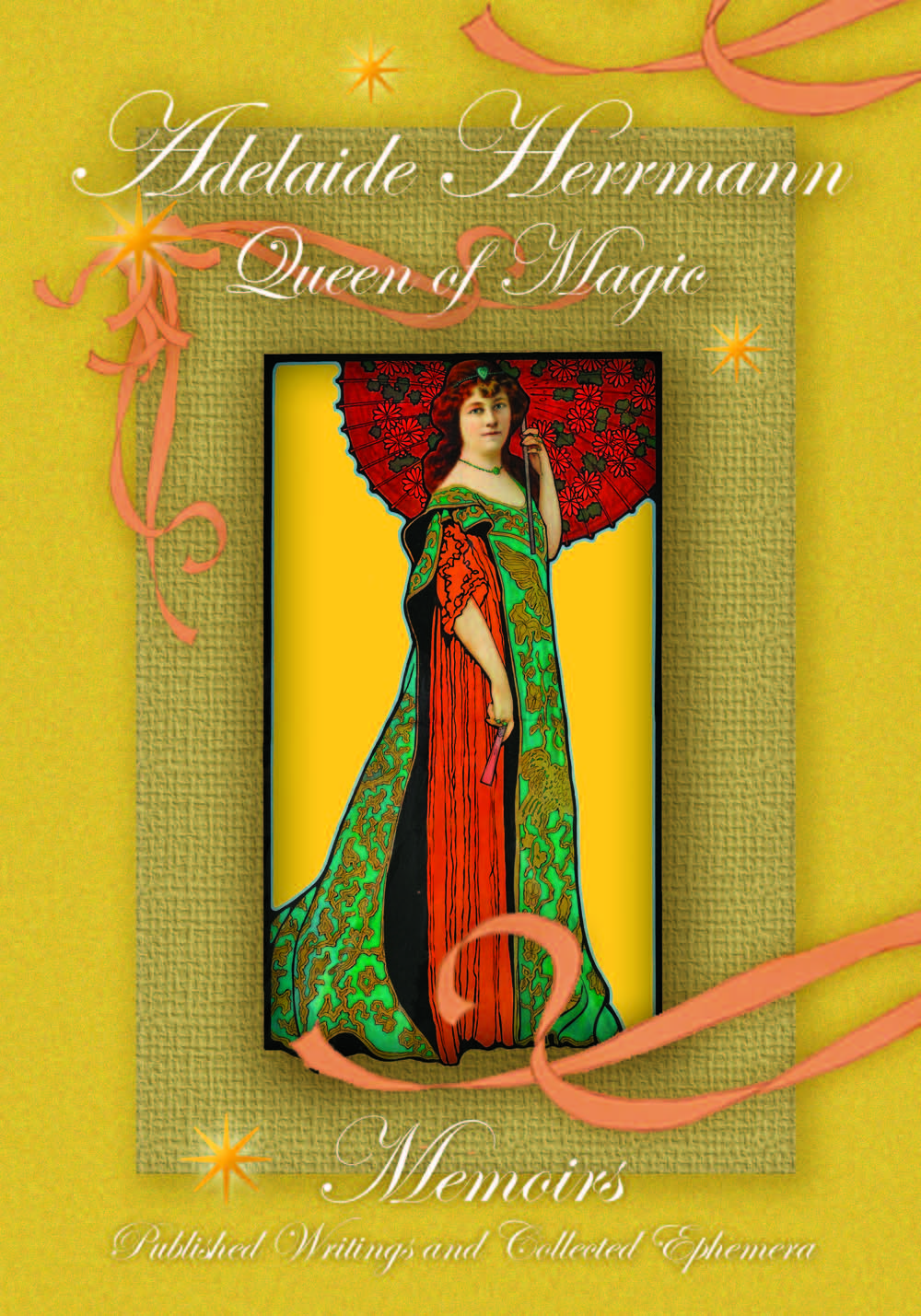
Adelaide Herrmann, Queen of Magic: Memoirs, Published Writings, Collected Ephemera
Edited by Margaret Steele
(Bramble Books)
Herrmann (1853–1932) is recognized as the world’s first great female magician. Her memoir disappeared after her death and resurfaced in 2010. Steele’s tribute includes the first publication of Herrmann’s memoir as well as 145 rare photos and ephemera gathered from major magic-history collections. “A must-own for fans of magic,” Kirkus Reviews says.
Margaret Bungay Steele ’75 is a professional magician, magic historian, and writer specializing in the lives and careers of early female magicians.
Bardolf
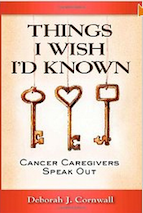
Things I Wish I’d Known
By Deborah Cornwall
Created on the premise that family caregivers are silent and often hidden protagonists in the war on cancer, this book is based on confidential interviews with a broad sample of cancer caregivers from across the country. Cornwall shares the practical things new caregivers need to know as well as the emotional stories that led to their knowledge.
A breast-cancer survivor, Deborah Handloff Cornwall ’68 has been a volunteer leader for the American Cancer Society and its Cancer Action Network for nearly two decades. Things I Wish I’d Known is her first book.
Gotham
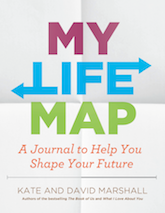
My Life Map: A Journal to Help You Shape Your Future
By Kate and David Marshall
This self-help journal explains why and how to create a visual road map of your past and future. It offers writing prompts, exercises, and charts to help those at any stage of life, and covers major areas including family, friends, work, play, service, and learning.
Kathryn Lacy Marshall ’81 and her husband, David, have written six other journals. Their eighth book, What I Love About You, Mom, comes out in 2013.

Smart Guide Publications
The Smart Guide to Understanding Your Cat
By Carolyn Janik
This comprehensive handbook aims to offer new insights into the feline in your life, addressing everything from interpreting a cat’s body language to caring for an older cat.
The Smart Guide to Understanding Your Cat is the twenty-third book of nonfiction by Carolyn Lech Janik ’62. Of her many pets, Janik’s favorite was a feline named Emily Dickinson Kat.
Wesleyan University Press
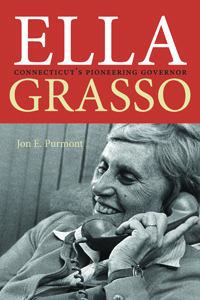
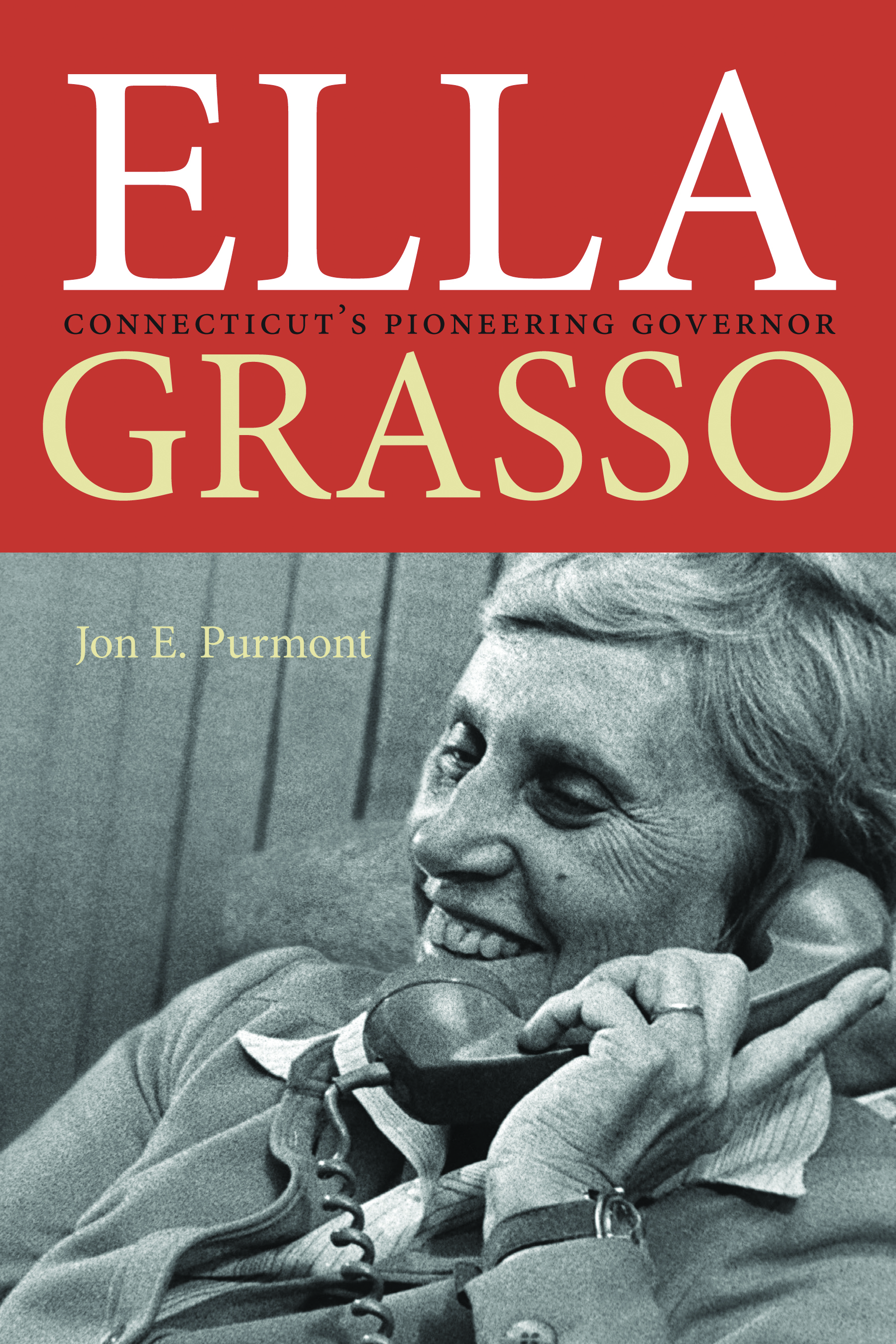
Ella Grasso: Connecticut’s Pioneering Governor
By Jon E. Purmont
Purmont, an emeritus professor of history at Southern Connecticut State University, served as Grasso’s executive assistant when she was governor of Connecticut, from 1975 to 1980. This biography draws on Purmont’s diary, research in Grasso’s archives, and interviews with Grasso’s family and friends.
Ella Tambussi Grasso ’40 was the first woman in the United States to be elected governor in her own right.
Palgrave Macmillan
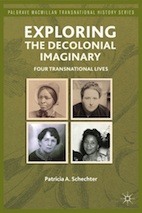
Exploring the Decolonial Imaginary: Four Transnational Lives
By Patricia Schechter
This book focuses on race and racialization in the lives of four women whose careers crossed national borders between 1880 and 1965: Liberian missionary Amanda Berry Smith, author Gertrude Stein, feminist arts impresario and publisher Josefina Silva de Cintron, and labor activist Maida Springer.
Patricia Schechter ’86 is a history professor at Portland (Oregon) State University. Her book Remembering the Power of Words: The Life of an Oregon Activist, Legislator, and Community Leader was published last year.

University of Massachusetts Press
Peril in the Ponds: Deformed Frogs, Politics, and a Biologist’s Quest
By Judy Helgen
During the 1990s, thousands of deformed frogs suddenly and mysteriously appeared across the country. Many had missing or extra limbs, missing eyes, or misshapen jaws. As a government biologist, Helgen led her state agency’s investigation into the widespread deformities and developed a biological rating system for evaluating pollution in wetlands.
Research scientist Judy Cairncross Helgen ’60 is retired from the Minnesota Pollution Control Agency.
Duke University Press
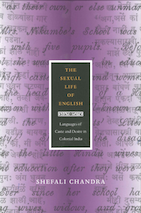
The Sexual Life of English: Languages of Caste and Desire in Colonial India
By Shefali Chandra
This book examines how English became an Indian language. By drawing attention to sexuality and power, Chandra argues that Indian English was shaped by conflicts over caste, religion, and class.
Shefali Chandra ’94 is an assistant professor of history at Washington University in St. Louis.
Lexington Books
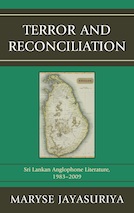
Terror and Reconciliation: Sri Lankan Anglophone Literature, 1983–2009
By Maryse Jayasuriya
Jayasuriya’s first book explores the English-language literature that emerged from Sri Lanka’s recent ethnic conflict between government forces and Tamil separatist guerrillas. It looks at the various ways in which writers of poetry, short fiction, and novels have represented the violence and terror of the fighting and offered solutions for reconciliation.
Maryse Jayasuriya ’97 is an assistant professor of English at the University of Texas at El Paso. She holds a doctorate in postcolonial literature and theory.
Center for Orang Asli Concerns
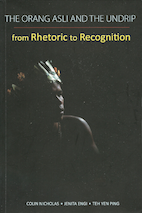
The Orang Asli and the UNDRIP: From Rhetoric to Recognition
By Colin Nicholas, Jenita Engi, and Yen Ping Teh
This book looks at gaps in the application of the United Nations Declaration on the Rights of Indigenous Peoples on Malaysia’s indigenous Orang Asli people. It traces the fate of the Orang Asli in history and explains how they came to be in their present circumstances.
Yen Ping Teh ’12 interned at the Center for Orang Asli Concerns in summer 2010, during which time she coauthored The Orang Asli and the UNDRIP with the center’s founder and coordinator.
NGO Committee on Ageing
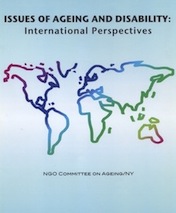
Issues of Ageing and Disability: International Perspectives
Edited by Mary Mayer and Florence Denmark
Developed under the auspices of the Non-Governmental Organization Committee on Ageing at the United Nations, this publication comprises ten articles chosen from submissions by scholars from around the world. It was supported by the UN Focal Point on Ageing and the Secretariat for the Convention on the Rights of Persons with Disabilities.
Mary Levy Mayer ’45 represents the International Federation on Ageing at the United Nations.
Fiction
Viking
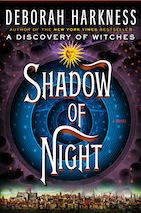
Shadow of Night
By Deborah Harkness
When A Discovery of Witches, the first novel in Harkness’s All Souls Trilogy, debuted at number two on the New York Times best-seller list, it set the stage for Shadow of Night, which bested its predecessor by debuting at number one. The second installment in the trilogy finds witch historian Diana Bishop and vampire/geneticist Matthew Clairmont time-traveling to Elizabethan England in search of a magical alchemical manuscript. The Hollywood Reporter calls Shadow of Night “Twilight for grownups—only better.” Entertainment Weekly says, “The joy that Harkness, herself a historian, takes in visiting the past is evident on every page.”
Deborah Harkness ’86 is a professor of history at the University of Southern California. Her most recent scholarly book is The Jewel House: Elizabethan London and the Scientific Revolution. A Discovery of Witches was her fiction debut.
Henry Holt
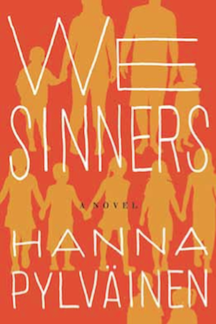
We Sinners
By Hanna Pylväinen
Pylväinen’s critically acclaimed debut novel explores the consequences of leaving one’s religious community. The book follows each member of a large fundamentalist family after two of the children reject the church. Kirkus Reviews calls We Sinners a “lovely, lyrical debut novel of a family in slowly unfolding crisis.” Melanie DeNardo, Henry Holt’s associate director of publicity, tells the Quarterly, “We are absolutely thrilled to publish Hanna’s book; it is truly one of the best works of fiction I’ve had the pleasure of reading in years.”
Hanna Pylväinen ’07 holds a master of fine arts from the University of Michigan. She left the Finnish fundamentalist faith of her youth; We Sinners is drawn from her own life experience.

Thomas Nelson
The Stars Shine Bright
By Sibella Giorello
Two-time Pulitzer Prize nominee Giorello returns with the fifth installment in her Raleigh Harmon mystery series. For her newest assignment, Harmon, an FBI special agent, forensic geologist, and MHC alumna, goes undercover to find out who’s fixing the races—and killing the horses—at a thoroughbred track called Emerald Meadows. “My protagonist always mentions Mount Holyoke in every book,” Giorello tells the Quarterly. The Seattle Times has noted that while the Harmon series explores Christian themes, it does so “lightly, in a way that will appeal to crime-fiction fans along the religious/spiritual continuum.”
Sibella Connor Giorello ’85 is a former features writer for the Richmond (Virginia) Times-Dispatch. The Stones Cry Out, the first Raleigh Harmon book, won a Christy Award for Christian fiction in 2008.
Self-published Books
CreateSpace
Destined: A Novel of the Tarot
By Gail Smith Cleare ’72
This book of “magic realism” follows protagonist Emily Ross as she takes a job at a curio shop owned by an occult scholar who recognizes Emily’s psychic talents. Publishers Weekly says, “Cleare offers a little bit of self-help and a little bit of chick lit, packaged together with a positive, make-your-own-destiny message: a pleasant, comforting read.”
Gail Smith Cleare ’72 is a writer, photographer, and designer. She hosted a tarot chat room on AOL for many years, and has done thousands of tarot readings. Destined is her first novel.
CreateSpace
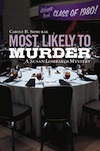
Most Likely to Murder
By Carole Shmurak ’65
CreateSpace)
The fourth installment in Shmurak’s Susan Lombardi mystery series finds Lombardi—college professor, educational consultant, and amateur sleuth—returning to her hometown for a reunion of her high-school class. When a member of her old gang ends up dead, Lombardi and her friends team up to find the classmate “most likely to murder.”
Carole Shmurak ’65 is an emerita professor at Central Connecticut State University. She is the author of eleven books.
Book Publishers Network
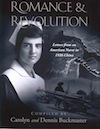
Healing, Romance, and Revolution: Letters from an American Nurse in 1926 China
Compiled by Carolyn and Dennis Buckmaster
Idealistic nurse Harriet Smith 1918 went to China from 1921 to 1924 to work with the Yale in China program. She returned in 1926, at the height of the Chinese revolution, and this book compiles the letters she wrote home during that year.
Carolyn Buckmaster is a great-niece of Harriet (“Aunt Hat”) Smith 1918. Dennis Buckmaster is her husband.
CreateSpace
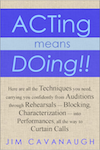
ACTing Means DOing!!
By Jim Cavanaugh
This book promises “all the techniques you need” to carry actors confidently from auditions and rehearsals to performances and curtain calls. “Jim is an expert at breaking down an actor’s work into manageable steps and clear, doable lessons,” says Susan Daniels, chair of Mount Holyoke’s theatre-arts department.
Jim Cavanaugh is an emeritus professor of theatre arts at Mount Holyoke. He taught at the College for twenty-three years and is credited with founding its summer theatre.
This article appeared in the fall 2012 issue of the Alumnae Quarterly.
MHC Songs
No matter where you are in the world, these Mount Holyoke songs will transport you back to campus. Happy listening.

Class and Club Products
Classes and clubs raise funds to support their activities and/or the Alumnae Scholar Fund by selling MHC-related products. Order a Mount Holyoke gift today.


