


Eleanore Velez FP’07 – The Great Equalizer
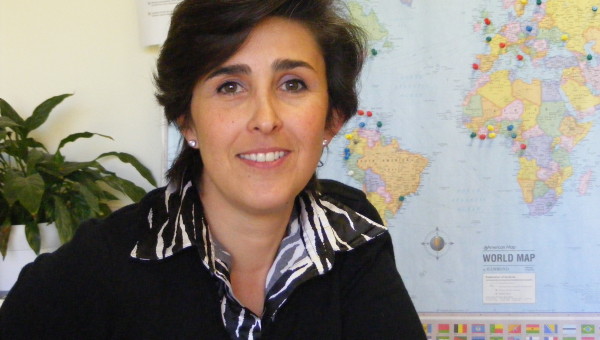
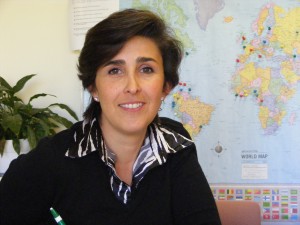 Eleanore Velez FP’07 was exposed early in life to people from all over the world when business associates of her grandfather would visit their home in Mexico City, speaking different languages and sharing their food and cultures.
Sent to a YMCA camp in the Berkshires as a girl, she spent thirteen summers as a camper, then a counselor, and ultimately as the international staff coordinator. She became the voice of the kitchen and maintenance workers from foreign countries.
“I’m a natural advocate,” says Eleanore, who currently works as a multicultural admissions and community outreach counselor at Berkshire Community College in Pittsfield, Massachusetts.
Eleanor spent three years working for the YMCA in New York City, in part running a program that took disadvantaged Americans kids to Mexico. The Y exposed her to a different America, one that was economically and socially stratified, she says. “I realized that not all kids that are American play tennis.”
In New York she also became acutely aware of her status as a minority Latina, something she had never thought about before. In a city of such great diversity, there remains enormous division, she realized.
Returning to the Berkshires with her husband to raise her children, Velez first worked for the Latin American Council where she assisted El Salvadorans, Colombians, and Puerto Ricans relocating to the area. (The Latino population in Berkshire County rose 26 percent between 2000 and 2004.) “It taught me about other people’s struggles,” she explains.
Her own education and work at Berkshire Community College now allows her to offer support and information to recent immigrants interested in getting their children into college, an opportunity the parents never had.
“I do believe that education is the great equalizer. MHC inspired me,” says Eleanore. Velez now has her sights set on establishing a women’s college in Mexico.—M.H.B.
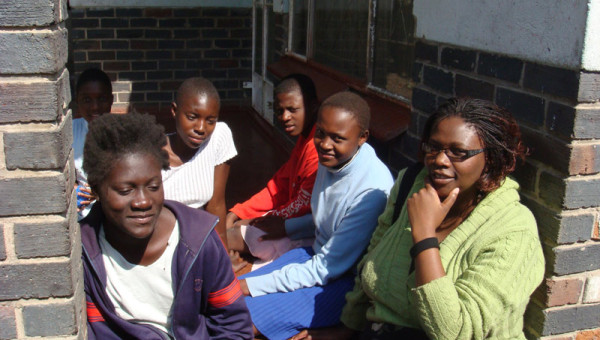
Tafadzwa Muzhandu ’05, Jennifer Kyker ’02, Memory Bandera ’04 Bringing Hope and Help to Zimbabwe’s Orphans
Tafadzwa “Fadzie” Muzhandu ’05 (in green sweater) with Tariro participants
What started as a high-school fascination with traditional African music eventually led Jennifer Kyker ’02 to found an organization that aids Zimbabwean orphans.
Even before coming to MHC, Jennifer learned the Shona language, lived in Zimbabwe, and studied the indigenous mbira, a thumb piano. An MHC senior thesis and subsequent Fulbright project deepened her connection to the country. “Many young women I knew were in situations very different than mine because they had not been able to complete a basic high school education,” Kyker recalls. “Many had to drop out after being orphaned by HIV/AIDS.”
Back in her native Oregon, she started talking to others, including Memory Bandera ’04. Since every student in Zimbabwe must pay to attend classes (and for books, supplies, and school uniforms), and since secondary-school fees are often beyond poor people’s means, Tariro (which means “hope” in Shona), was formed in 2003 to meet this need. Memory now sits on Tariro’s board of directors.
Jennifer is working toward her PhD. in ethnomusicology at the University of Pennsylvania, but remains executive director of Tariro. Last year the group hired its first and only paid staffer: Tafadzwa Muzhandu ’05. Fadzie, as she’s known, implements the day-to-day program practically single-handedly, although she sends e-mail updates to the board every other week.
“The girls are amazing and genuine, despite the difficult conditions they face,” Fadzi says. “The most difficult [part of the job] is trying to make school administrators understand that our students are unique and therefore need special attention. It’s also hard when your budget does not allow you to provide much-needed services, like tutoring and counseling.” She has high praise for Jennifer as “someone who really understands the plight of young women in Zimbabwe. Many organizations are not in touch with the recipients of their assistants, but I get to interact with students and their families.”
Today, the organization funds secondary schooling for some forty girls, thus giving them skills and hope for a brighter future. Five Tariro-sponsored girls have already graduated from high school, and one, Pauline, has gone on to the highly competitive University of Zimbabwe. Jennifer says Pauline wants to intern with Tariro this summer, training herself to work with other young women in need. Though still a young organization, Tariro’s work is beginning to come full circle.
To find out more or join the Tariro mailing list, visit www.tariro.org or e-mail Jennifer at jkyker@sas.upenn.edu.
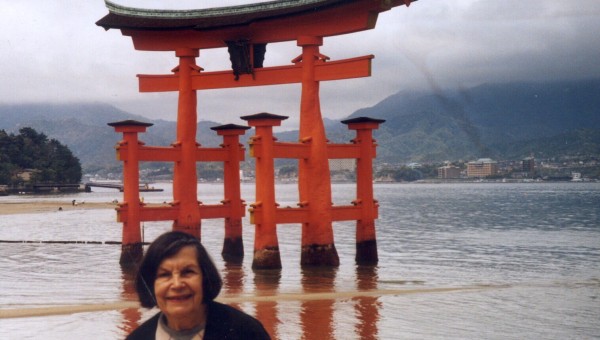
Edna Berk Kuhn ’46 – Not Guilty
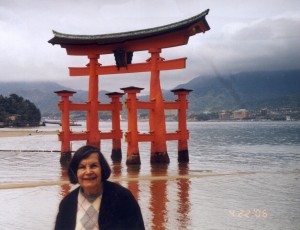 Once a week, and sometimes twice, Edna Berk Kuhn ’46 leaves her home in a leafy section of Riverdale in the Bronx, gets on a bus, and then on a subway, and then walks the final stretch to the Innocence Project at Fifth Avenue and Fifteenth Streets in lower Manhattan. It takes her an hour and a half, which is long, but not nearly as long as the project’s clients have spent in prison, unjustly incarcerated, and hopeful of exoneration through DNA testing.
Kuhn, a foster care and adoption attorney for twenty years before she began work at the project seven years ago, is assigned to read the “maybe” cases. The files of convicts, whose background material indicates they may have been wrongfully convicted and that there likely is DNA available to be tested, are sent to Kuhn.
“Most of what we get is not developed,” she says. The project was started in 1992 as a clinic for law students at Cardozo School of Law at Yeshiva University and since then 215 people have been exonerated, including sixteen who had been sentenced to death. “Even if you think you have a case, you have to convince the court that the DNA can be tested, convince the judge to reopen the case,” and meet a laundry list of other standards before a case gets the project’s full attention, Kuhn explains.
The group has opened up the country’s eyes to a systemic problem in the justice system, and works on policy reform to lessen the common problems of misidentification by eyewitnesses, false confessions, bad legal representation, and poor training in forensic labs. “I’m delighted to be part of it,” says Kuhn.
A graduate of Smith College School for Social Work after MHC, Kuhn was a psychiatric social worker and then represented children’s agencies for more than twenty years before attending Columbia Law School in 1968. “I’ve had a good life,” she says without pretense and adds that there is a lot to be said for working and remaining intellectually engaged past one’s traditional “expiration date.”—M.H.B.
Learn more at InnocenceProject.org.
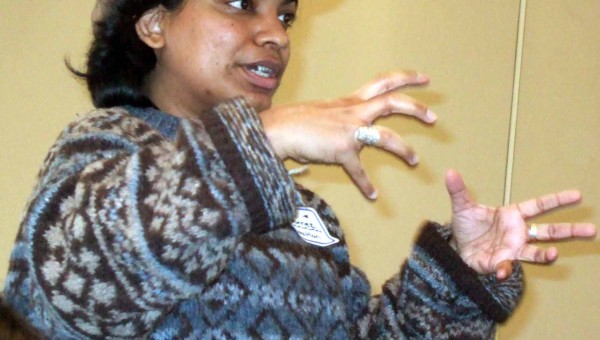
Carol Gomez ’93 – Modern Abolitionist
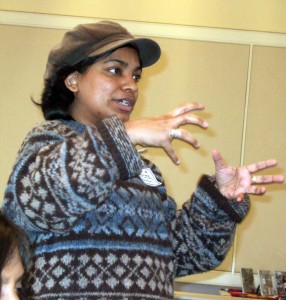
While few people realize that slavery—or human trafficking—is still going on, the good news is that anti-slavery activists are also still fighting it.
Carol Gomez ’93 started the Boston-based organization MataHari: Eye of the Day, part of the Trafficking Victims Outreach and Services (TVOS) Network, which works on immigrant rights, human rights, and “dignity for all,” she says. “Our primary focus is ending violence against women,” including the reality that some women are so desperate to get to the United States that they end up being sold into slavery.
One woman from Southeast Asia was purchased online for $9,000 and held captive in Western Mass., Carol says. Physically abused and terrorized by the man who bought her, the woman escaped and was found by local police. The Northampton, Mass., District Attorney’s office called Carol.
The woman wanted to come here to work and earn money for her family back in Asia. “Extreme poverty can drive people to desperate measures,” says Carol. When the woman escaped, the sham marriage brokers who arranged the sale sent thugs to threaten her parents and child, still in a small Asian village. Carol lined up advocates to try to help her and her family, but the effort went awry when access to the woman suddenly was cut off by the domestic-violence shelter where she was staying, whose staff bought her a plane ticket and sent her home. “We told the shelter staff that this was not your standard domestic violence case,” says Carol, but the explanations “fell on deaf ears.”
The FBI and U.S. Attorney’s offices were ready to bring charges against the brokers, and there was a real possibility of bringing the woman’s family here for asylum, but, with the woman gone and with no way to reach the family’s small village, “it all fell apart,” says Carol.
Since modern slavery was only formally recognized by the U.S. government in 2000, Carol says, there is still a lot of education to be done in systems meant to protect women. “It is hard when the current immigration policies are so broken,” she says. “There are many real hurdles to overcome,” she adds. But she will keep working to clear those hurdles away.—E.C.W.
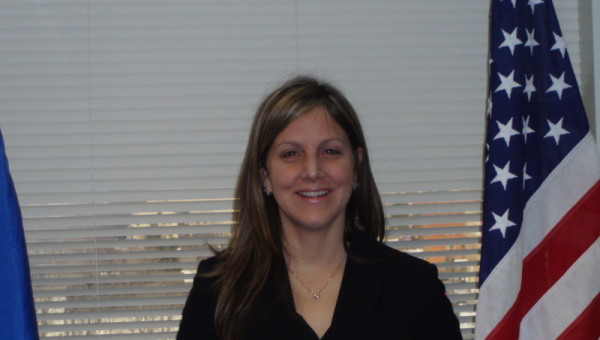
Michelle Cruz FP’98 – Victims’ Rights Watchdog
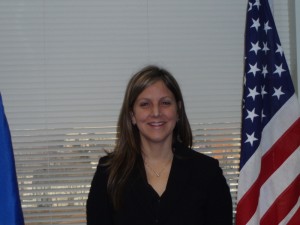 Michelle Cruz FP’98, named state victim advocate for Connecticut last year, says her new position couldn’t be a better match. “I’ve dedicated my life to this work. I’ve always known that I wanted to defend women’s and children’s rights.”
Appointed by Governor M. Jodi Rell, Michelle is the watchdog for victims’ rights. She acts as a mediator between crime victims and the various agencies that touch their lives including law enforcement, the courts, the state attorney’s office, and social-service agencies. Looking ahead, Cruz says she will meet with the head of judicial marshals to review and devise a safety plan for each local court house, and advocate for protective orders for victims of sexual assault who are unrelated to their assailants.
Michelle graduated from University of Connecticut School of Law and now practices in Hartford. Originally from California, Cruz was inspired by the groundbreaking work in domestic violence of a prosecutor, Sarah Buel, in the Massachusetts District Attorney’s Office. She moved east to work in the DA’s office in western Massachusetts as a prosecutor specializing in domestic violence, sexual assault, and child abuse.
Cruz attributes her success to her time at Mount Holyoke, where every woman around her was “involved in changing the world,” and more specifically, to head crew coach Jeanne Friedman and the time she spent on the water. “Jeanne taught us to be sensitive to the people around us … to make us aware that every ripple we make has the potential to affect someone’s life. She took every opportunity to enlighten us about the struggles of other people.”
Speaking of her present goals, Cruz’s calm, assiduous nature—which carried her across the country to MHC and across many finish lines—emerges. “I want to be successful in this position, to help people, and to foster good relationships.”
—By Adrienne Anifant ’00
This article appeared in the spring 2008 issue of the Alumnae Quarterly.