


Alum Film: My Name Was Bette: The Life and Death of an Alcoholic
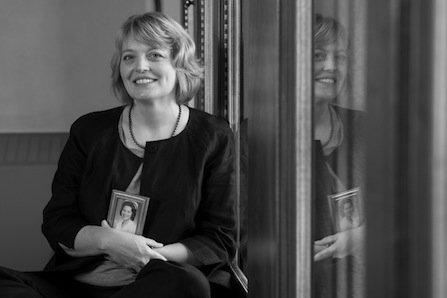
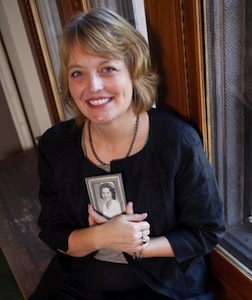
Sherri VandenAkker ’87, holding a photo of her mother, Bette
Photo by Paul Schnaittacher
To celebrate her tenth wedding anniversary in 2007, Sherri VandenAkker ’87 and her husband, Malcolm, drove west from Boston to retrace the events of that memorable day. They had married in Abbey Chapel and VandenAkker wanted to savor, once again, a sunny, fall day on campus.
They had just begun their walk when she got the call. It was the police, telling her they were about to break into her mother’s house. No one, including VandenAkker, had been allowed inside for sixteen years. Bette VandenAkker had lived as a virtual recluse; her days spent drinking Canadian Club whiskey, her mind, body, and household crumbling around her as she refused all visitors.
What police found that day was a scene that no daughter should ever have to witness. Her mother was dead, her body badly decomposed, and her house literally filled to the rafters with garbage and excrement and empty bottles of booze. It took a hazmat unit three weeks to clean the premises. The few personal effects Sherri now cherishes had to be decontaminated before they were given to her to keep.
The horrific circumstances of her mother’s death and the complicated feelings that VandenAkker experienced afterward led her to make an hourlong documentary, My Name Was Bette: The Life and Death of an Alcoholic. A professor of literature at the School of Human Services at Springfield College in Boston, she teamed up with Boston University film major Josh Hays to coproduce the film.
Through interviews with Sherri, her sister Krystyn White, and their mother’s best friends, the film lovingly outlines Bette’s personal journey as an independent woman of the 1960s and ’70s who was derailed time and again by circumstance, depression, and chronic substance abuse. Photos of Bette as a vibrant, young woman are contrasted with a numbing picture of her bloated face taken following her arrest for driving an unregistered, uninsured car near the end of her life.
But the film is also intended as a broad examination of the effects of alcohol on women, specifically, who are 50 percent more likely to die of the disease than are men, because of their slower metabolism, hormonal system, and social tendency to drink in secret. VandenAkker’s mother also had problems with her eyes, her heart, her balance, her stomach, and her sense of smell, and she had panic attacks.
“I wish I had understood earlier that it’s a disease” that affects every system of the body, Sherri VandenAkker said. “One of my goals is to make sure this is well known; not to proselytize about drinking, but to make people aware.”
By the end of Bette’s life, VandenAkker had come to the realization that “whatever pain she caused people, [Bette] was suffering so much more profoundly.” Now a joyful mother of two herself, Sherri has come to “a profound forgiveness and appreciation” of the person her mother was before alcoholism, she says. “I’m so sad at what she missed.”
—By Mieke H. Bomann
This article appeared in the winter 2012 issue of the Alumnae Quarterly.
• Find out how to see the film by emailing VandenAkker.

More Books: Winter 2013
 You Can’t Win if You Don’t Play
BY DAVID T. BARRY WITH LYNNE C. LEVESQUE, ED.D
(Shadow Press)
Lynne C. Levesque helped David Barry, age ninety-four, assemble a book of stories and leadership lessons he considers critical to living a good life. Barry made a living in the small-business world and perhaps the most important lesson he has taken from his experience is “you can’t win if you don’t play.”
Lynne C. Levesque ’66 has written several articles, case studies, and one book: Breakthrough Creativity: Achieving Top Performance Using the Eight Creative Talents.
Frozen
BY CARLA TOMASO ’72 (Carma Press)
Tomaso’s fifth novel spins the strained mother-daughter relationship from an unimaginable angle: daughter Elizabeth must raise her wretched, cryogenically frozen mother, Helen, as though she were her own. Not much about Helen has changed since death and being frozen, Elizabeth quickly finds herself trapped in a chilling nightmare. Dark, smart and at times even humorous.
Carla Tomaso ’72 teaches English at the University of Pasadena, her four other novels also center on relationships between women.
 Moved by Politics
BY GERHARD LOEWENBERG (Gray Pearl Press)
Gerhard Lowenburg recounts in twelve acts his journey from young immigrant of war-ravaged Germany in New York City, to Professor at Mount Holyoke, to the Dean of the University of Iowa’s College of Liberal Arts and the co-founder of the Legislative Studies Quarterly. It is an intimate reflection on the academic world and political science in the second half of the 20th century.
Gerhard Loewenberg is a Professor Emeritus and UI Foundation Distinguished Professor of comparative politics at the University of Iowa. He has written many books on his area of expertise, European legislatures, but this is his first memoir.
 Watch Me Disappear
BY DIANE VANASKIE MULLIGAN ’01
Mulligan has written a young adult novel that returns to every day life and all its complexity. Without vampires or magic, the nuanced young character Lizzie leads a story that explores the eternally befuddling real world: friends, parents and boys—loneliness, lies and love. The book was a quarterfinalist for the Amazon Breakthrough Novel Awards.
Diane Vanaskie Mulligan teaches high school English and is the director of the Betty Curtis Worcester County Young Writers’ Conference. This is her first novel.
—By Zanna McKay
Jan Dailey Schnell ’65: A Light Touch for Pets in Pain
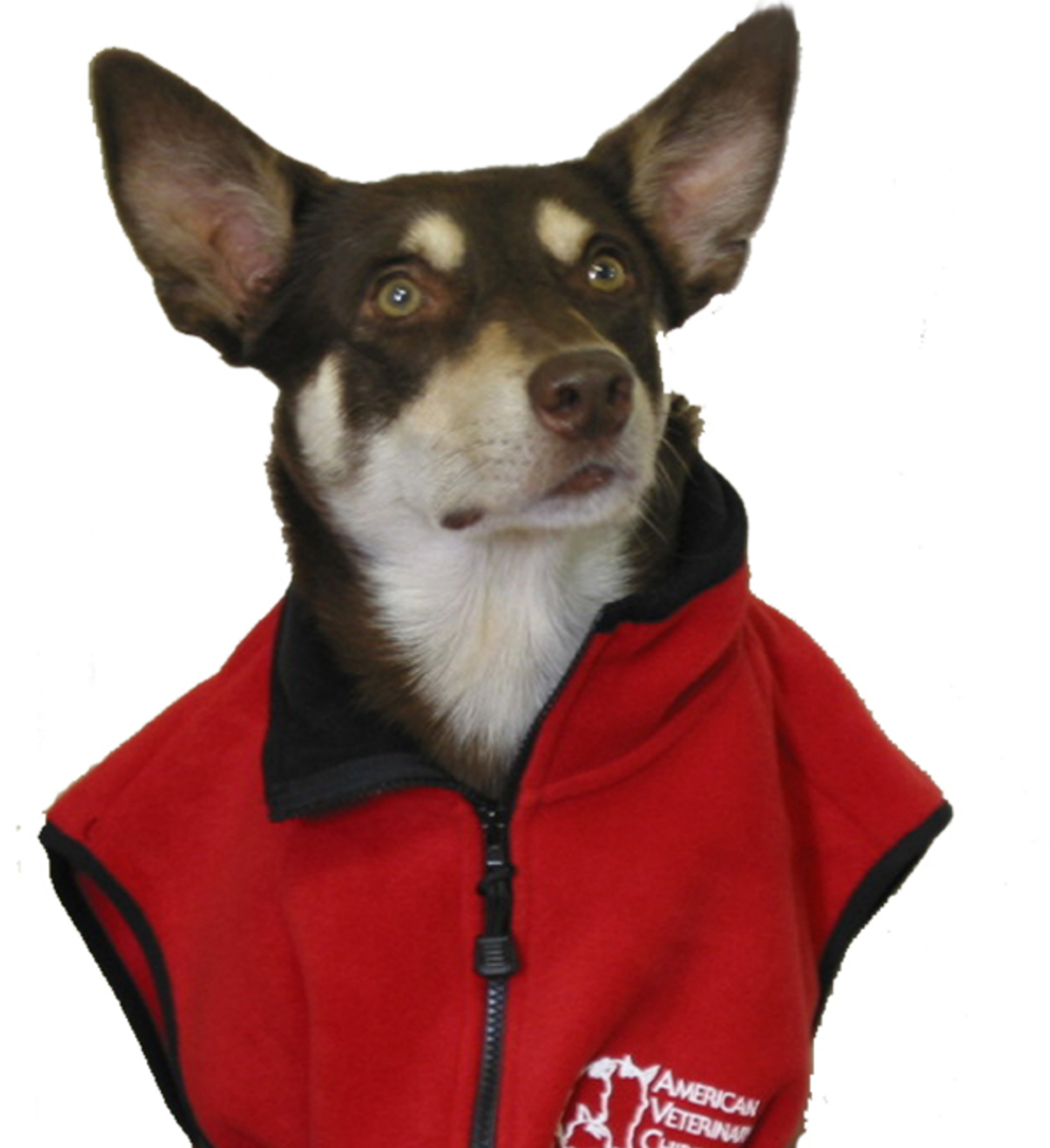
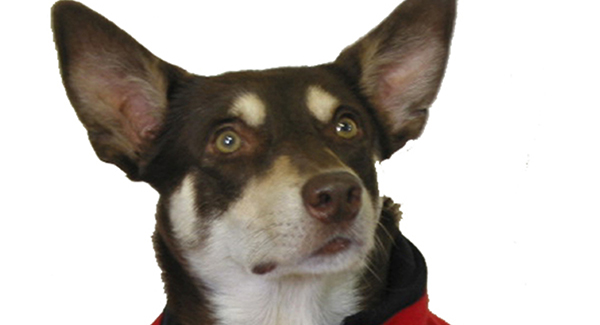
Jan Dailey Schnell ’65 is certified by the American Veterinary Chiropractic Association, which supplied this photo.
Jan Dailey Schnell’s path from conventional veterinarian to veterinary chiropractor—one of only about 500 in the world—started with an injured sled dog.
“He had run into the side of a pickup truck,” Schnell recalls. “He was in my office, and you could see his back was out of position. I did what I was taught to do: Give him steroids, and get him up walking again. He was walking, but he was pretty miserable. His owners eventually took him to their chiropractor, and he was able to get the dog off of steroids. He wasn’t a sled dog again, but he was a pet dog, and he felt a lot better.”
Schnell describes the experience as a “game changer” for her. A 1987 graduate of the University of Minnesota College of Veterinary Medicine, she sought out the American Veterinary Chiropractic Association—the leading organization of its kind—and became a certified veterinary chiropractor in 1997. She does continuing education to renew her certificate every three years, and practices in her home state of Wisconsin as well as in Minnesota and Ontario.
Unlike the majority of veterinary chiropractors, who focus on horses, Schnell specializes in small animals—dogs and cats, mostly, but also rabbits, ferrets, birds, turtles, and more. She uses chiropractic to treat everything from ear infections and collapsing trachea in dogs to hairballs and abscesses in cats. She even fixed a parakeet’s eye problem by realigning the little bird’s eyeball with its socket. “With chiropractic you can do things you couldn’t otherwise do,” she says.
Getting permission from pet owners to adjust their animals can mean countering assumptions that chiropractic is painful or scary, Schnell says. “Most of my clients, when you say ‘chiropractic,’ they think it’s going to be wham, bang, pop, and that the animals will have to be held down,” she says.
Not so. Schnell has developed a kinder, gentler technique—she calls it “butterfly-light manipulation”—that puts animals at ease, so much so that they commonly fall asleep. “Chiropractors need to move in the direction I have, which is to make it totally painless,” she says. “I tell my clients, ‘It shouldn’t hurt.’”
—By Christina Barber-Just
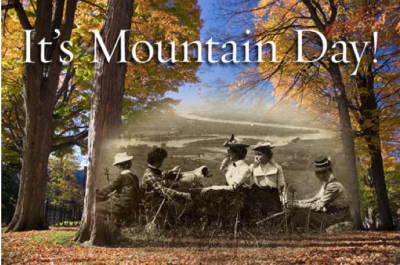
2011 Mountain Day Goes Viral
Alumnae Mountain Day Mini-reunions Around the World
Mountain Day went viral this year, with simultaneous alumnae gatherings in fifty-one locations spread over five continents.
Here’s what it looked like on October 6 in locations ’round the world.
-
- Students snapped up these special caps provided by the Alumnae Association.
-
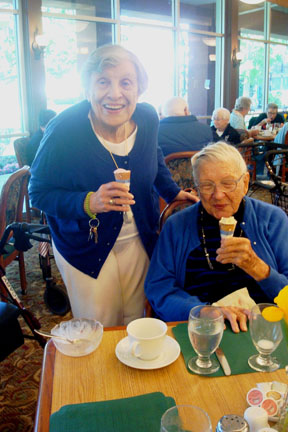
- In Santa Barbara, California, Renee Scialom Cary ’48 (left) and Elizabeth “Betsy” Caldwell Hastings ’38 delight in their Mountain Day cones at a retirement home. (Photo by Helene Hellstern)
-
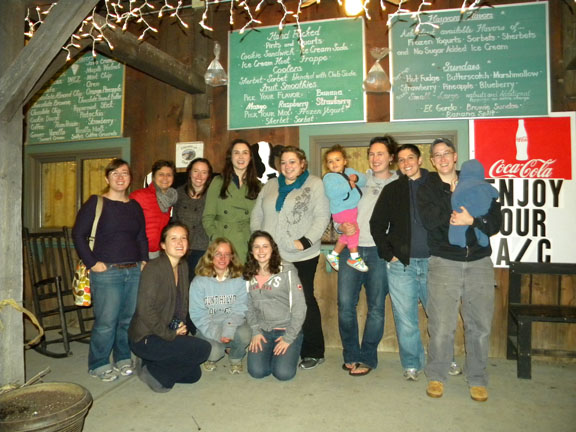
- In the Pioneer Valley of Massachusetts, alumnae gather with friends and family members at Flayvors of Cook Farm in Hadley for local dairy treats.
-
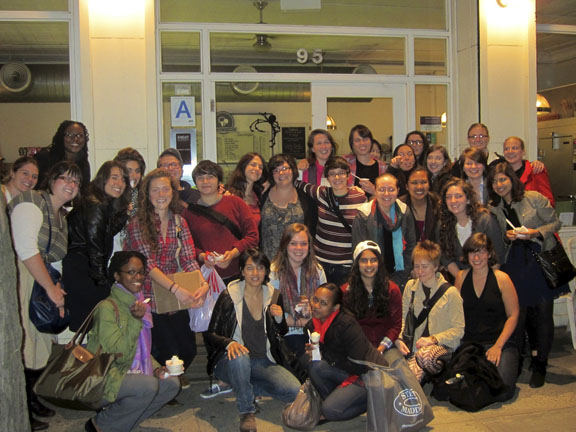
- In New York City’s East Village, thirty-five alumnae celebrated the big day at Sundaes and Cones. (Thanks to Meredith Nelson ’11 for the photo)
-
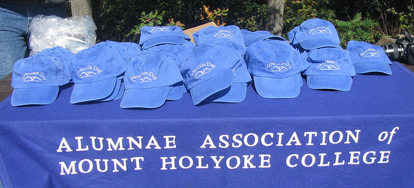
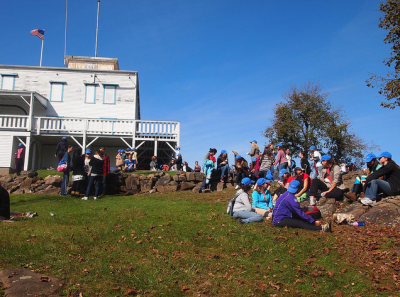
- The Alumnae Association handed out specially made Mountain Day caps to more than 800 students who arrived at the mountaintop.
-
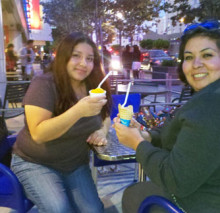
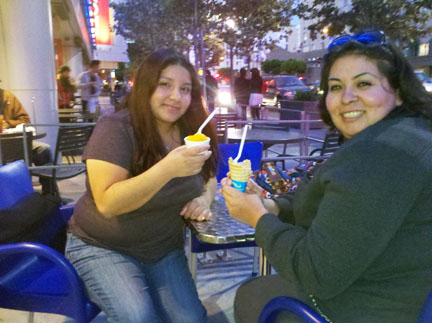
- In Los Angeles, Maria Varona ’07 and friend Rosalba Gonzalez ’06 shared ice cream at the New Zealand Natural parlor. (Thanks to Maria for the photo)
• See the full list of US and international minireunions held on Mountain Day. (To display the list, click on “See More” under the first item listed on the page to which this links.)
Mountain Day in South Hadley
The Alumnae Association handed out specially made Mountain Day caps to more than 800 students who arrived at the mountaintop. Photo of students (and a couple of surprise alumnae) atop Mt. Holyoke
Your memories of Mountain Days Past
You shared more than 160 memories and comments on Facebook on the Mountain Day Memories page.
Meet More Everyday Athletes
Katharine Sjoberg said she’d run a marathon with fellow 2003 alumna Leah Riley Thompkins on one condition—that they win. Thompkins reasoned they’d win if they were the only runners in a category. So “Team Tripod” ran an entire marathon as a three-legged race!
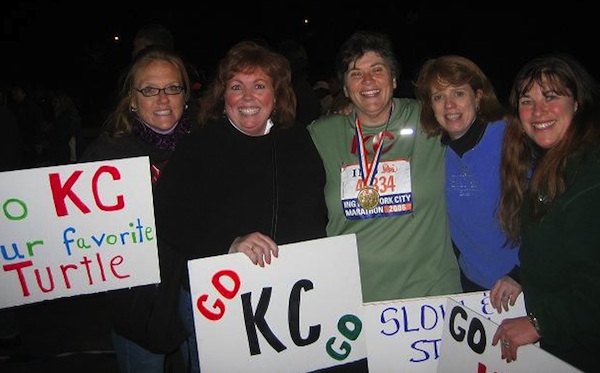
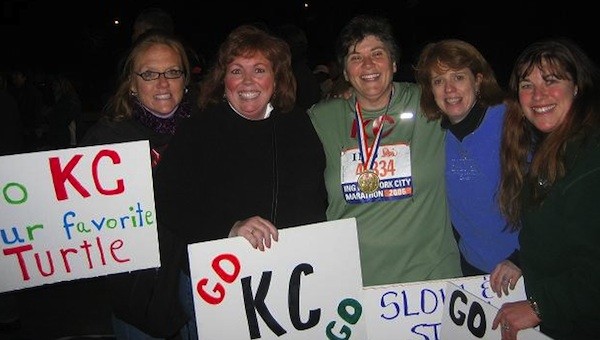
Backed by stamina and an all-MHC cheering squad, KC Maurer ’84 finished her first marathon in 2006.
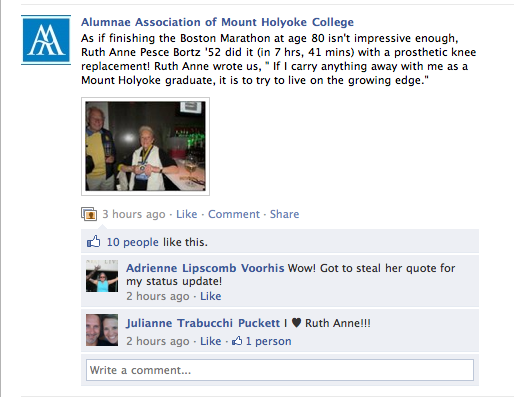
Ruth Anne Pesce Bortz ’52 was an Alumnae Association Facebook heroine when she finished the 2011 Boston Marathon at age eighty.
Student Athletics (Go, Lyons!)
How’s your favorite sports team doing? Who’s Lyon of the week? Click here for all your athletics answers.